

Fire is one of the oldest elements, and it captured the human imagination with its mystery, strength and power. Our ancestors learned to keep a flame going long ago, but starting a fire from a spark was a real challenge. In small cottages it also got dark quite early, so there was a need to light the home. That is how the device this article is about appeared — the splinter torch, known in Ukrainian as luchyna.
What was a luchyna and how was a cottage lit?
A luchyna was an archaic device for lighting a village home, used across Ukraine for centuries. It was also called luchynka, luchyvo, lipinka, skypa or shkalia. In English the same thing is usually called a splinter torch or rushlight; in Poland it was known as łuczywo.
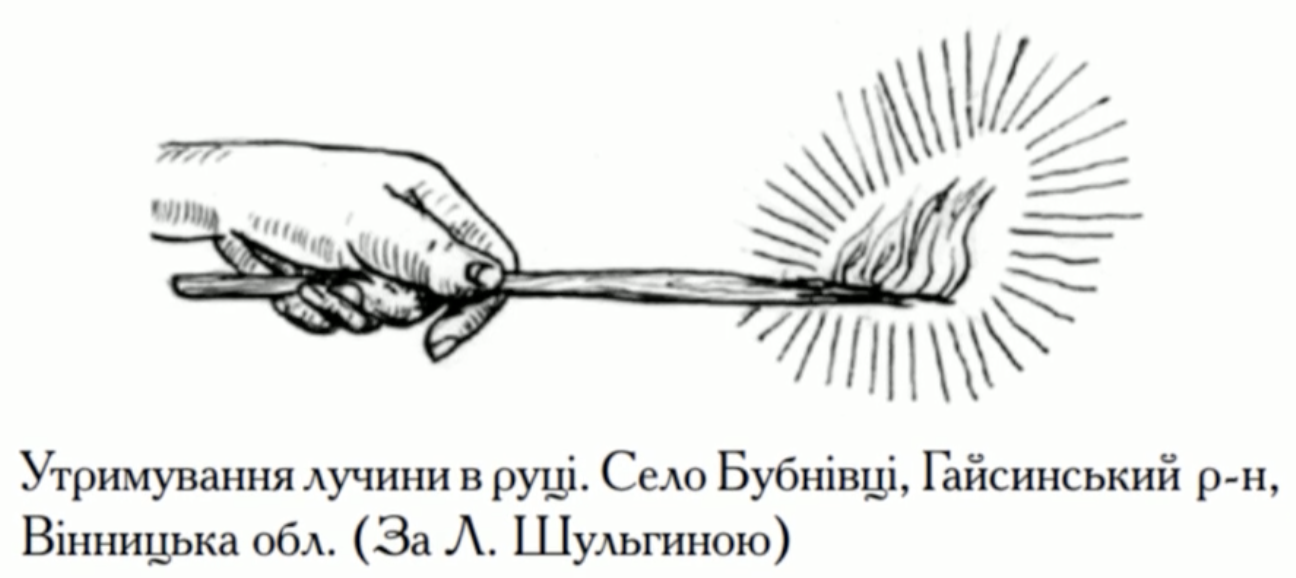
The luchyna was made from a splinter chipped off the trunk of a tree — pine, spruce, fir, beech or hornbeam. Most often it was a sliver about 1 cm thick, 2–3 cm wide and 25–45 cm long. The prepared splinters were dried thoroughly indoors, then tied into bundles and hung in the store room.
Such a "candle" burned for 10–20 minutes, depending on the thickness and length of the splinter. To make burning safe, several kinds of holder were used:
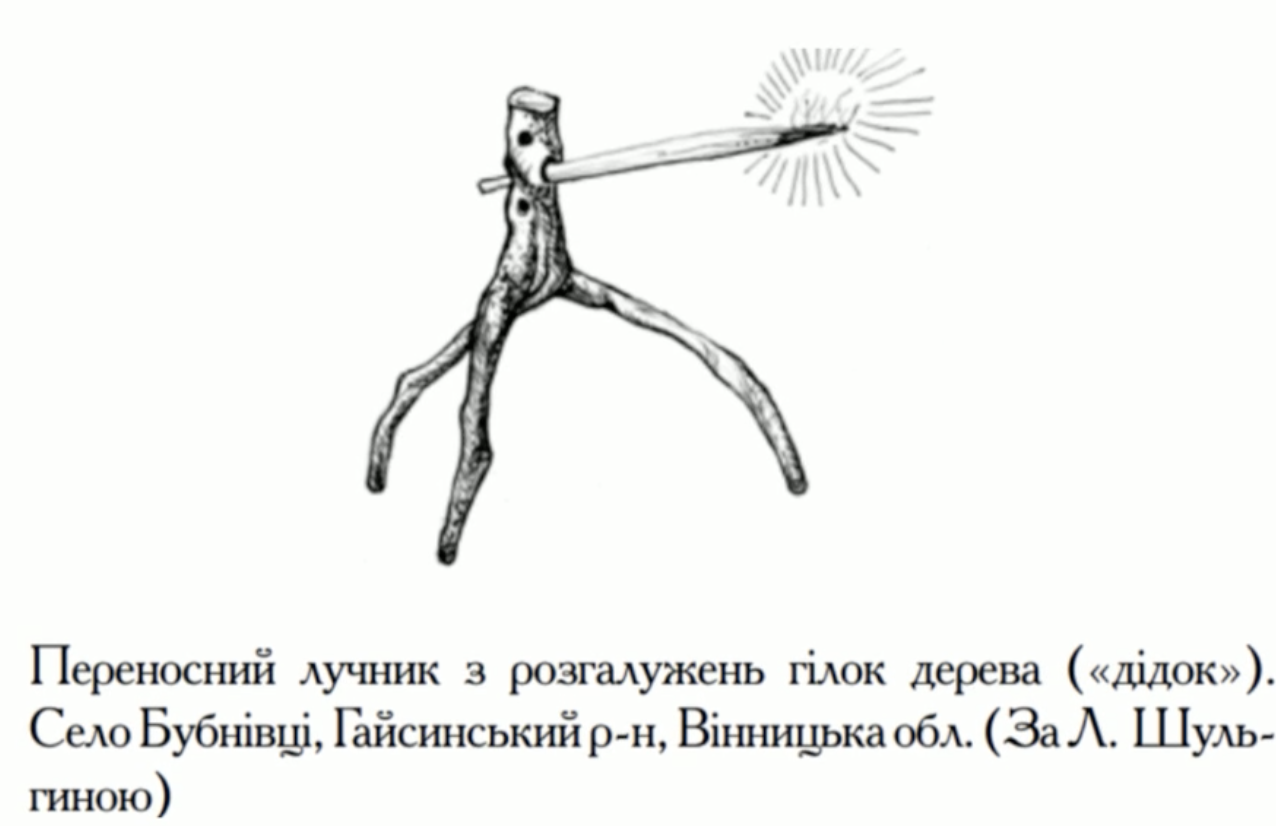
- portable — for holding the splinter in the hand while it burned, on a stand of clay, metal or wood (these were called svytychok, didok, babka);
- removable — a forged metal grate, also known as hratka, zaliza, kahanets or sitka;
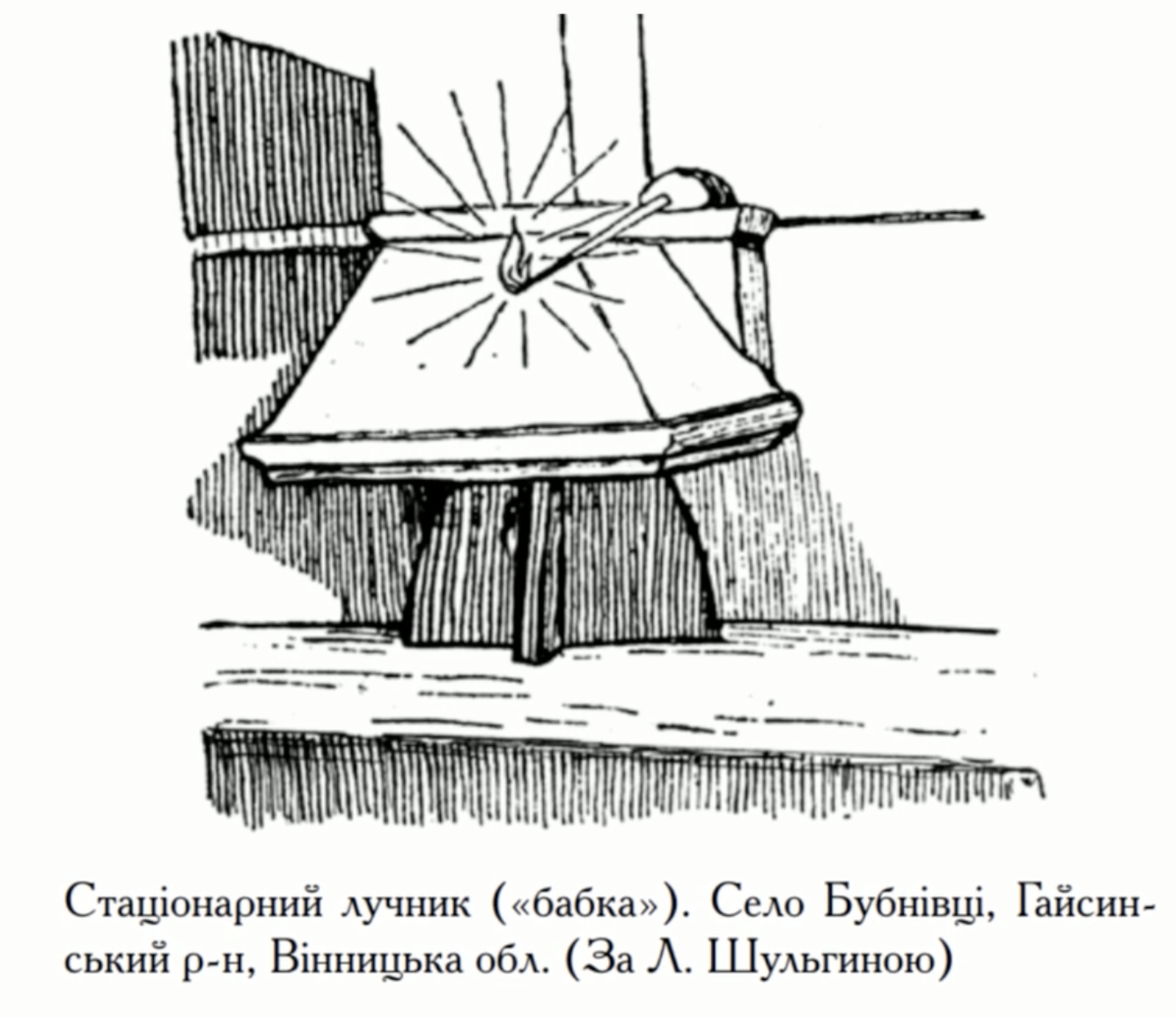
- fixed — a wooden shovel set in the wall opposite the chimney, on which the splinter was laid, or a small hearth built into the side of the stove (called posvitok, kominok, kominchyk, svitlach);
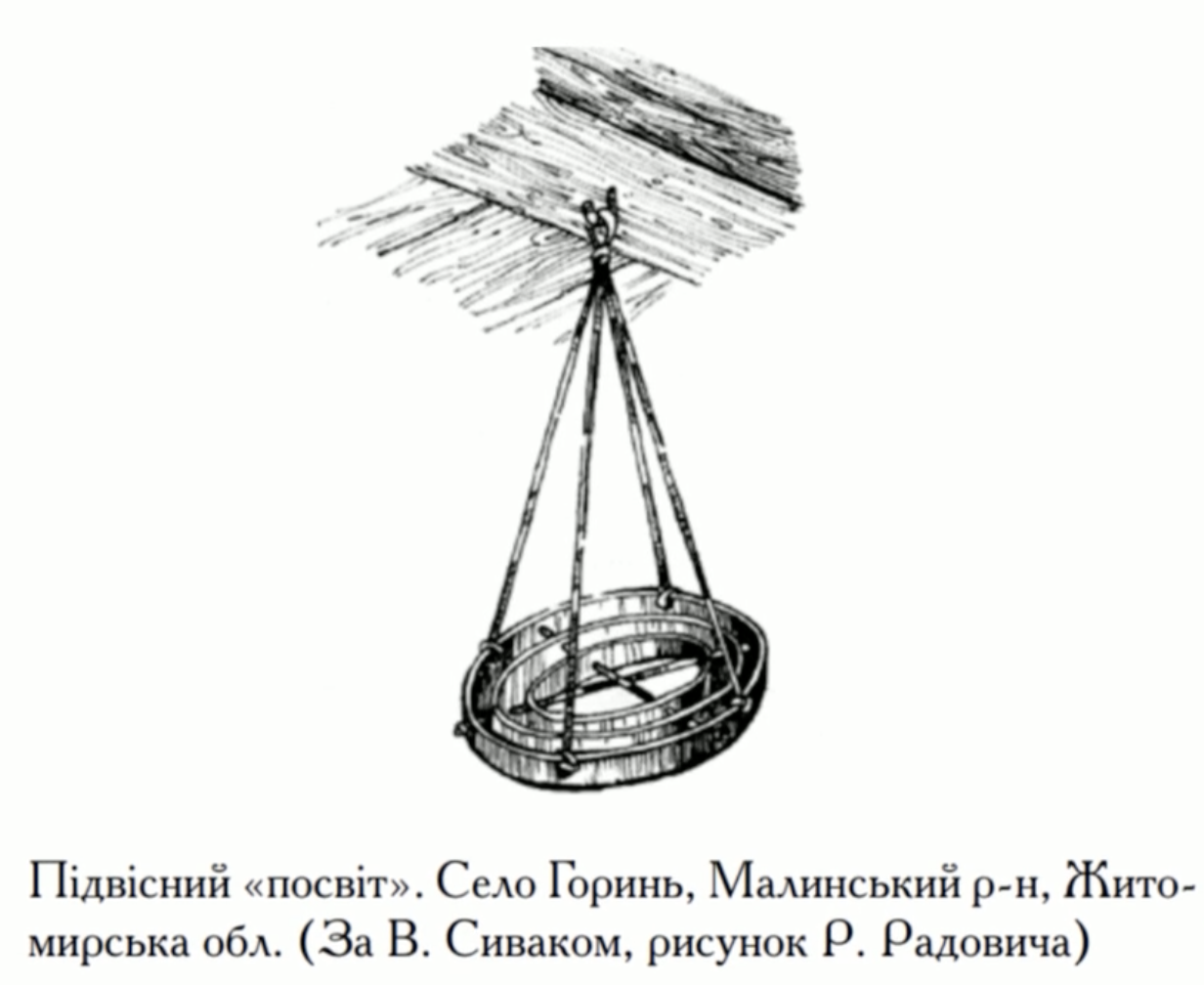
- hanging — the posvit, made of 3–4 metal hoops of different diameters, set one inside another and joined with wire: the burning splinter was placed on the hoops on top, and a plate for ash was put underneath.
Besides lighting, the luchyna was also used to light stoves. It caught quickly, held the flame for a long time and set the firewood burning.
What has replaced the luchyna today?
Today the job of the splinter at lighting time has been taken over by ready-made firelighters for fireplaces — safer and more predictable than a sliver of resinous pine, and leaving no harmful deposits in the flue. The fire itself has been enclosed in modern fireplace inserts and stoves, in which the heat does not escape up the chimney but returns to the room.
And one detail has not changed at all: then as now, the fire needed dry wood. A resinous splinter was dried indoors for weeks before use, exactly as firewood is seasoned to 15–20% moisture today — because damp wood spends its energy on evaporating water instead of giving light and heat.
SAVEN — let us keep our culture alive together!
READ ALSO: