

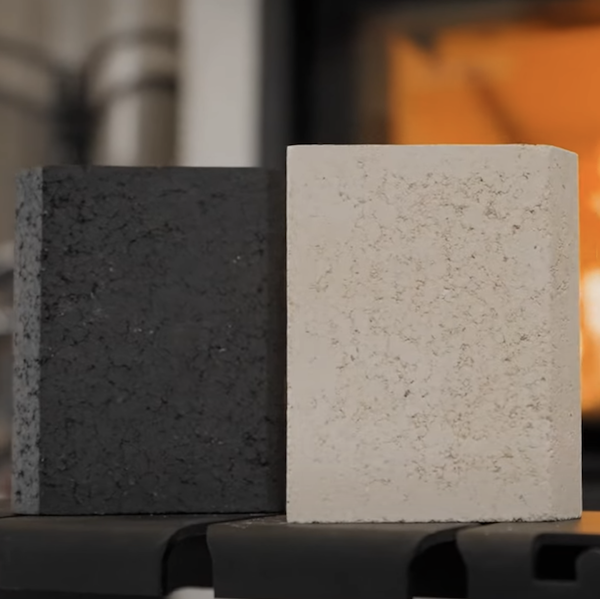
Chamotte is one of the best materials for fireplace inserts and stoves due to its unique properties. Its history dates back centuries, and modern production technologies allow for even more durable and efficient refractory materials. The use of chamotte in the design of fireplaces and stoves ensures their durability, safety, and efficiency, making it an indispensable material in the heating industry.
History of the Origin and Use of Chamotte
Chamotte is one of the oldest refractory materials used for building stoves and fireplaces. It was invented in ancient times when craftsmen were searching for a material capable of withstanding high temperatures. However, the first industrial production of chamotte bricks began in the 19th century. In 1822, William Weston Young in the Neath Valley, Wales, developed the technology for manufacturing refractory bricks, which led to the widespread use of chamotte in metallurgy, construction, and heating.
Due to its unique properties, chamotte materials have become indispensable for lining fireplace inserts, stoves, and other high-temperature installations. Today, chamotte is widely used in the construction of fireplaces, stoves, wood-fired boilers, and even industrial units.
Composition and Characteristics of Chamotte
The basis of chamotte consists of crushed refractory clay mixed with quartz sand, aluminum oxide, and other mineral additives. This mixture undergoes high-temperature firing, making the material highly resistant to mechanical and thermal stress. Chamotte is characterized by high density, resistance to open fire, and the ability to accumulate and gradually release heat.
Chemical Composition of Chamotte
Chamotte consists of refractory clay that undergoes a firing process at temperatures up to 1500°C. Its main components are:
- Silica (SiO2) – 40-60%
- Alumina (Al2O3) – 10-40%
- Iron oxide (Fe2O3) – 1-5%
- Alkaline oxides (Na2O, K2O) – <3%
- Lime and magnesia (CaO, MgO) – <5%
- Loss on ignition – 5-14%
This combination of components ensures chamotte's high thermal resistance, low shrinkage, and good mechanical strength.
Modern Production Process of Chamotte Materials
The production process of chamotte includes several key stages:
- Preliminary clay firing – the clay undergoes thermal treatment to remove moisture and organic impurities.
- Grinding – the fired material is ground to the required size, from fine powder to coarse grains.
- Shaping products – chamotte is mixed with fresh clay or other components and pressed into the desired forms.
- Firing – the shaped products are fired again in kilns at high temperatures (1700–1730°C) to ensure their strength and heat resistance.
- Final processing and testing – the quality of the products is checked, including strength, porosity, and thermal stability.
Advantages of Chamotte for Fireplace Inserts and Stoves
The main advantages of chamotte include:
- High thermal resistance – chamotte withstands temperatures above 1500°C, making it ideal for use in fireplaces and stoves.
- Resistance to sudden temperature changes – it does not crack or deform under abrupt temperature fluctuations.
- Fire resistance – prolonged exposure to high temperatures does not lead to loss of strength or destruction.
- Low porosity – chamotte does not absorb moisture, enhancing its durability and reducing the risk of damage due to freezing water.
- Energy efficiency – effectively accumulates heat and gradually releases it, reducing fuel consumption.
- Mechanical strength – withstands significant physical loads without deformation.
Chamotte Lining of SAVEN Steel Fireboxes: Reliability, Efficiency, Style
SAVEN steel fireplace inserts stand out for their high quality, durability, and modern design. One of the key features of these inserts is the lining with 35 mm thick refractory chamotte plates. This solution not only improves the operational characteristics of the firebox but also enhances its efficiency.
What is Chamotte Lining and Why is it Needed?
Lining is the internal cladding of the combustion chamber with a special refractory material that protects the metal structure from overheating and deformation. SAVEN inserts use high-quality European chamotte, one of the best materials for finishing fireplaces and stoves.
Thanks to its heat-resistant properties, chamotte performs several important functions:
- Protects the metal combustion chamber from extreme temperature stress.
- Increases thermal inertia – accumulates and evenly distributes heat.
- Improves fuel combustion efficiency, promoting more complete gas afterburning.
- Extends the lifespan of the firebox by preventing overheating and premature wear of the steel.
Advantages of Chamotte Lining in SAVEN Fireboxes
1. High-Quality European Chamotte, 35 mm Thick
Unlike cheap alternatives that quickly deteriorate and cannot withstand high temperatures, SAVEN inserts use thick, European-made chamotte. It is produced by grinding refractory clay and firing it multiple times, ensuring high strength and thermal resistance.
2. Unique Design
The chamotte lining in SAVEN inserts is not only functional but also aesthetically pleasing. The plates feature a unique, custom design that complements modern interiors, giving the firebox an elegant look.
3. High Thermal Resistance
The chamotte used in SAVEN fireboxes can withstand temperatures up to +1200°C, making it an ideal material for intensive fireplace use. Additionally, it is resistant to sudden temperature fluctuations, ensuring its longevity.
4. Protection Against Cracking Under High Temperatures
Thanks to its special structure and manufacturing technology, the chamotte plates in SAVEN fireboxes do not crack even under prolonged exposure to high temperatures. This ensures stable operation and minimizes the need for repairs.
5. Prolonged Heat Retention
One of chamotte’s key advantages is its ability to store heat and gradually release it even after the fire has gone out. This helps maintain a comfortable room temperature for longer, increasing the efficiency of the firebox.
Why Choose SAVEN Fireboxes with Chamotte Lining?
Chamotte lining in SAVEN steel fireboxes is not just an additional protection but a technological solution that significantly enhances fireplace performance. Thanks to the use of high-quality chamotte, SAVEN fireboxes combine:
- Durability – protects steel elements from overheating and burnout.
- Efficiency – better heat utilization and reduced wood consumption.
- Safety – stable operation without the risk of overheating or deformation.
- Aesthetics – stylish, custom chamotte lining design that complements the interior.
Choose SAVEN fireboxes – a combination of modern technology, high-quality materials, and impeccable design!