

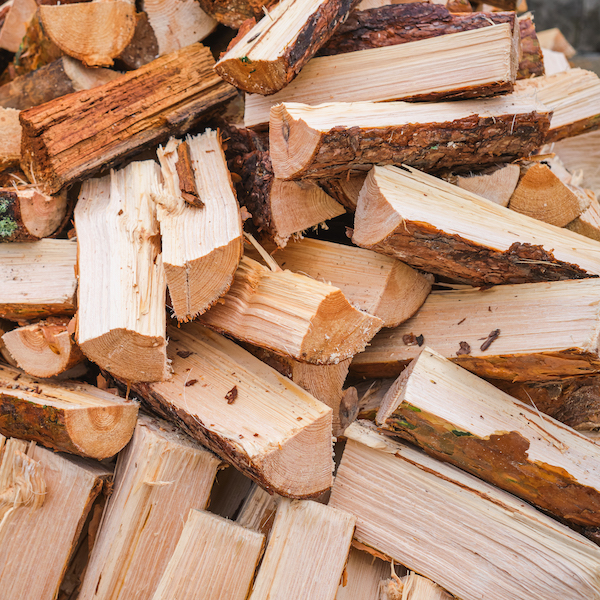
So you have decided to buy a wood-burning steel insert. The name itself — a wood-burning insert — points to the type of fuel: firewood. But it does not really answer the questions of what to light the insert with, which firewood is best for the job and which is better not used in a fireplace, how to load the wood into the firebox and so on. And even wood from the same species of tree can differ in size, shape and moisture content. All of those parameters have a direct effect on how your fireplace works.
In this article we go through every detail of choosing firewood for a steel insert and the finer points of loading it into the fireplace correctly.
How do you choose firewood for a fireplace?
Choosing the right firewood for a fireplace is the foundation of its efficient operation. If you select firewood for a steel insert sensibly, its efficiency will be as high as it can be, the flame inside the firebox will be bright, and one load of wood will last several hours of unattended burning. That result is only achievable if you know the properties of wood from different species and can combine them skilfully.

In general, when choosing firewood for lighting a steel insert, three parameters deserve attention:
- the species of tree;
- the moisture content of the wood;
- the size of the logs.
Which firewood is best for burning in a fireplace?
There is no universal answer to the question of which firewood is best. It all depends on what you want and what is available. If you are looking for wood that burns for a long time and crackles pleasantly in the firebox, look at beech and oak. If you enjoy a delicate aroma, fruitwood is the best choice for that.
Wood can also be divided by density. Firewood may be hard or soft. Hardwood is more difficult to light, but it burns for longer and gives more heat from a smaller volume. Softwood burns away quickly, but gives a bright and attractive flame.
The ideal firewood contains a minimum of resin, burns long and evenly and does not produce much smoke or soot. Wood from broadleaf species has exactly these qualities — birch, oak, hornbeam, alder, beech, maple, elm and ash. Wood from poplar, aspen, lime and willow is also used for burning, but is recommended only as an addition to another, principal fuel.
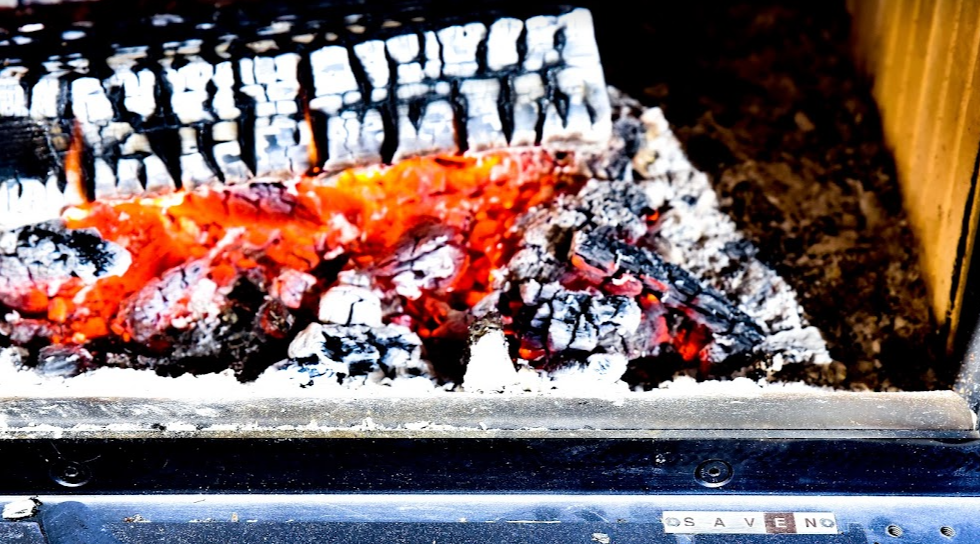
Among the hard broadleaf woods the undisputed leader is birch. The advantages of birch logs are:
- a low price
- economical consumption
- no sparks
- an even, bright flame
- good heat and long burning
The one drawback of birch logs is that they leave a lot of soot after burning. But if you strip the bark from the wood before loading it into the fireplace and add a few aspen branches (which have the property of clearing soot from the firebox), that problem is easily solved.
The classic choice of wood for a fireplace is oak. Oak is a hardwood that burns long and evenly, gives plenty of heat and a pleasant aroma. The disadvantage of oak logs is their high price — though consumption is quite economical.
Alder is not as popular as oak or birch, but in quality it gives up little to them. Alder logs produce a beautiful, even flame that burns long and brightly and fills the house with a very pleasant aroma. Alder also clears soot from the walls of the flue effectively, so it is worth adding to the main wood you burn.
Aspen works as a kind of cleaning agent for the chimney too. Aspen logs clear soot and deposits from the flue effectively, so they are often added to the fire along with other wood. There is no sense in burning aspen alone — it burns away too quickly. It is also often used to add brightness to the fire.
For decorative effect you can add poplar to the fire. Poplar logs burn very beautifully and brightly, but they burn away fast and give almost no heat. As a result you would have to add poplar logs every hour, so it makes more sense to use it in combination with another species.
Lime is also used together with other wood, usually with something that lights easily. Unlike poplar, which burns away very quickly, lime logs catch slowly, have a high heat energy and hold the heat excellently.
Wood from fruit trees — apple, pear, plum, apricot, walnut or chestnut — has a dense structure, burns for a long time and gives off a lot of heat. A pleasant bonus is that it smells good and crackles gently in the fire. However, the high resin content in apricot, cherry or plum encourages soot and deposits on the walls of the firebox and the flue pipe, so after burning them you need to see to cleaning the fireplace and the chimney.
| Properties | Firewood | |||
| Broadleaf trees | Fruit trees | Coniferous trees | ||
| Hard species | Soft species | |||
| Species of tree | birch, oak, hornbeam, alder, beech, maple, elm, ash | poplar, aspen, lime, willow | apple, plum, pear, cherry, walnut, chestnut | pine, cedar, spruce, larch, juniper |
| Speed of lighting | slow to light | quick to light | quick to light | light instantly |
| Length of burn | burn long and evenly, good heat | burn long and evenly, good heat | burn relatively long | burn away very quickly |
| Character of the flame | bright, even | bright, even | bright, with a light crackle | very bright, with a great deal of smoke |
| Smell, smoke, soot | no foreign smells, little smoke, no soot | no foreign smells, little smoke, no soot | a pronounced, pleasant fruity aroma, little smoke | a great deal of smoke and soot from burning resin, a characteristic resinous coniferous smell |
Note that for the same volume of wood, hard species give more heat than soft ones. At the same time soft species are usually cheaper. Softwood is ideal for lighting the fireplace at the beginning and the end of the cold season: it burns more cleanly but does not overheat the house and turn it into a sauna.
For firing the insert at the peak of winter, however — through long frosty nights — hardwood is the better choice. It will burn long and evenly, with a powerful heat. Even if the fire goes out before morning, the insulation of the house will keep the warmth inside. In the morning the fireplace will be at room temperature and the fire can be relit without any difficulty.

Can you burn pine logs in a fireplace?
Coniferous species (pine, spruce, cedar) contain a large amount of resin. As such wood burns, a greasy layer appears on the glass of the insert that is then hard to remove. While burning, the resin gives off a characteristic smell and a great deal of black smoke, which fouls the firebox and the flue.
Pine or cedar logs catch quickly and burn away very quickly, so there is almost no useful output from burning them.
Conifers also "shoot" as they burn. If you like that loud crackle of the wood, such species can serve for lighting the fire. But take the negative consequences of burning pine into account as well.
A great deal of smoke and soot, and rapid burning, do not make pine a good fuel for fireplaces. So conifers are usually used only at the very start of lighting rather than for a long burn, and only as an aromatic addition rather than as the main fuel.
What must never be used to light a fireplace?
Lighting a fireplace with foreign objects not provided for in the rules of use is strictly forbidden. Things such as wooden fragments of old furniture, benches and fences, old boards and other rubbish not only have a low heat output but are dangerous when burnt, because they release into the air the chemicals (paint, varnish, wood stain, primer, preservatives) with which they were once treated.
Under no circumstances may you burn rubbish in a fireplace or stove, even rubbish of organic origin, nor damp wood and boards, nor painted timber. Do not throw food waste, waste paper, fabric or other foreign objects into the fire. This can not only damage the fireplace and the flue but will seriously affect fire safety in the house.
In addition, a fireplace insert must not be fired with types of fuel that are not provided for in its operating instructions. If the manufacturer states that the only fuel for the insert is wood, it should not be burnt with coal.
What size should the logs be?
The size of the logs depends on the dimensions of the insert itself. Every fireplace insert has its own suitable size, but there are general rules to go by. For example, the length and width of a log should be about 3/4 of the width of the front of the firebox.
The recommended log diameter is 7-10 cm. Logs of that size catch more easily but do not burn away too quickly. The firebox should be filled about one third full — that gives the best air supply and draught.
Those who know recommend not being lazy and stripping the bark from the wood: there will be less soot, the fire will burn brighter, and the aroma will be more pleasant.

What moisture content should firewood have?
The moisture content of firewood is a very important figure. Damp wood burns badly, hisses and spits as it burns, giving off soot and black smoke that fouls the walls of the firebox and the flue. The energy efficiency of the insert also depends on how wet the wood is.
Ideally the moisture content of the wood should be under 15%, otherwise it will burn poorly, soot will appear on the glass surface of the insert, and the smoke will make it impossible to watch the flame.
The exact moisture content of wood can be determined with a special device — a moisture meter. If you have decided to buy a wood-burning insert, do not forget to add one to your shopping list; a moisture meter will definitely come in useful.
If the moisture figure exceeds 15%, the wood should be dried. Logs brought in from the yard in late autumn, for example, have a moisture content of about 17-20%, so they should be dried for around 24 hours. But if the stove has to be lit promptly, it is better to put such logs into an already well-warmed fireplace on the second or third load.
Wood that has lain indoors for about a week will have ideal moisture parameters.
Best of all is naturally seasoned wood — wood that has been kept in a ventilated space or outdoors under cover for at least six months, including the summer months.
3-8% moisture is the optimum figure for firewood, varying with the species. Wood in that condition should be used for the first firing.

How do you light a fireplace with unseasoned wood?
The short answer is that you do not, and it is better not even to try. Unseasoned wood — wood with a high moisture content — can become a real problem for the owner of a fireplace or stove. Because of the high water content the heat output of the insert drops noticeably, since a large part of the energy produced goes on evaporating water out of the wood.
Burning damp wood also produces condensate, which quickly fouls the firebox and the flue.
Ideally the moisture content of firewood should be under 15%. Wood with a moisture content of up to 25% is more or less acceptable, but even then it is better to dry it indoors for at least a day.
To keep firewood from being damp, it must be split reasonably small. There is no point in storing whole logs — they dry far more slowly. Split logs should be kept in a ventilated space or outdoors under cover, and dried in that way for at least six months including the summer season. Immediately before use, a portion of the wood should be brought into the house and left to dry a little more at room temperature.
Where should firewood for a fireplace be stored?
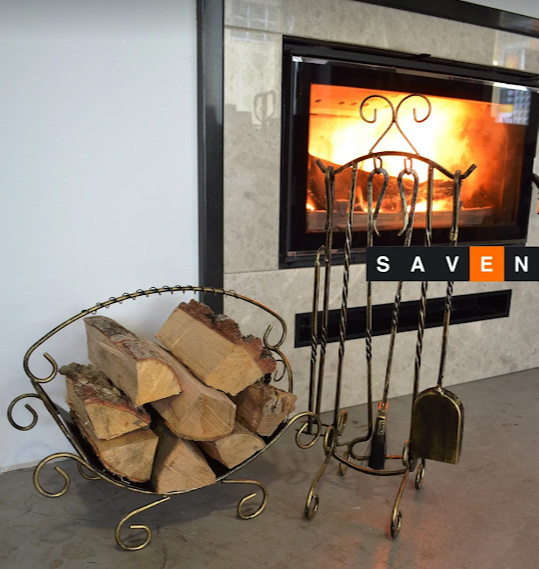
It is best to store the firewood you have set aside for the firebox in the same room as the fireplace itself — that is both practical and convenient. The place must be dry and clean. There are plenty of fireplace accessories designed for storing wood:
- stands
- log holders
- bags
- baskets
They not only keep the wood dry but fit harmoniously into the interior, complement the fireplace and complete the visual picture. Such accessories are of course only suitable for storing a small quantity of wood.
If you need to store large reserves of wood, it is better to build a shelter outside for the purpose, or keep it in a separate ventilated space — a store, a shed and so on.
► READ ALSO:
What firewood is best for a fireplace and stove
Top 3 problems in the operation of the fireplace and their solutions
The range of wood-burning appliances themselves is in the straight inserts, corner inserts and steel fireplace stoves sections.