

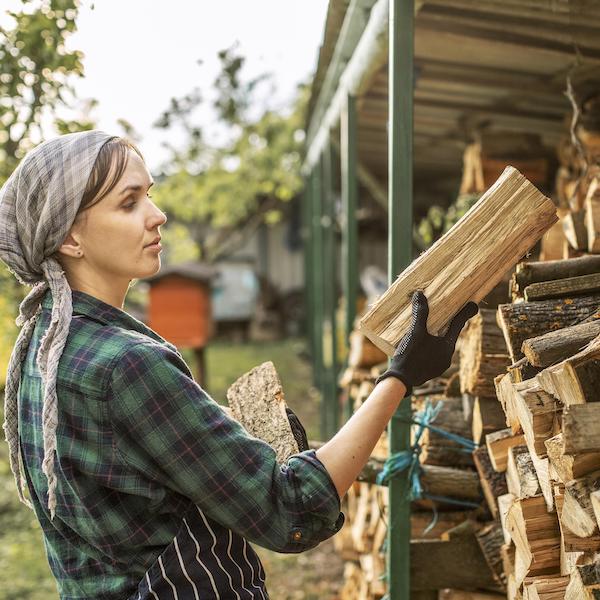
Proper firewood storage is not only a matter of convenience, but also of efficient fireplace or stove performance, home safety, and cost savings. Even the highest-quality firewood can lose its heating value if stored incorrectly: it can get wet, become moldy, or fail to dry properly.
The search query “how to store firewood” consistently ranks high in search engines during the cold season, as fireplace and stove owners aim to get maximum heat from every load. In this article, we will review 7 proven methods for safe firewood storage in a private home, provide practical examples, and offer recommendations on choosing the right wood species for a fireplace.
Why Proper Firewood Storage Is So Important
Before moving on to practical solutions, it is important to understand what happens to firewood when it is stored incorrectly:
- high moisture → reduced fireplace efficiency;
- mold and fungus formation → unpleasant odor and health risks;
- unstable combustion → more soot and dirty glass;
- ignition risk → fire hazard.
That is why firewood storage for a fireplace must be organized with proper ventilation, moisture protection, and easy access in mind.
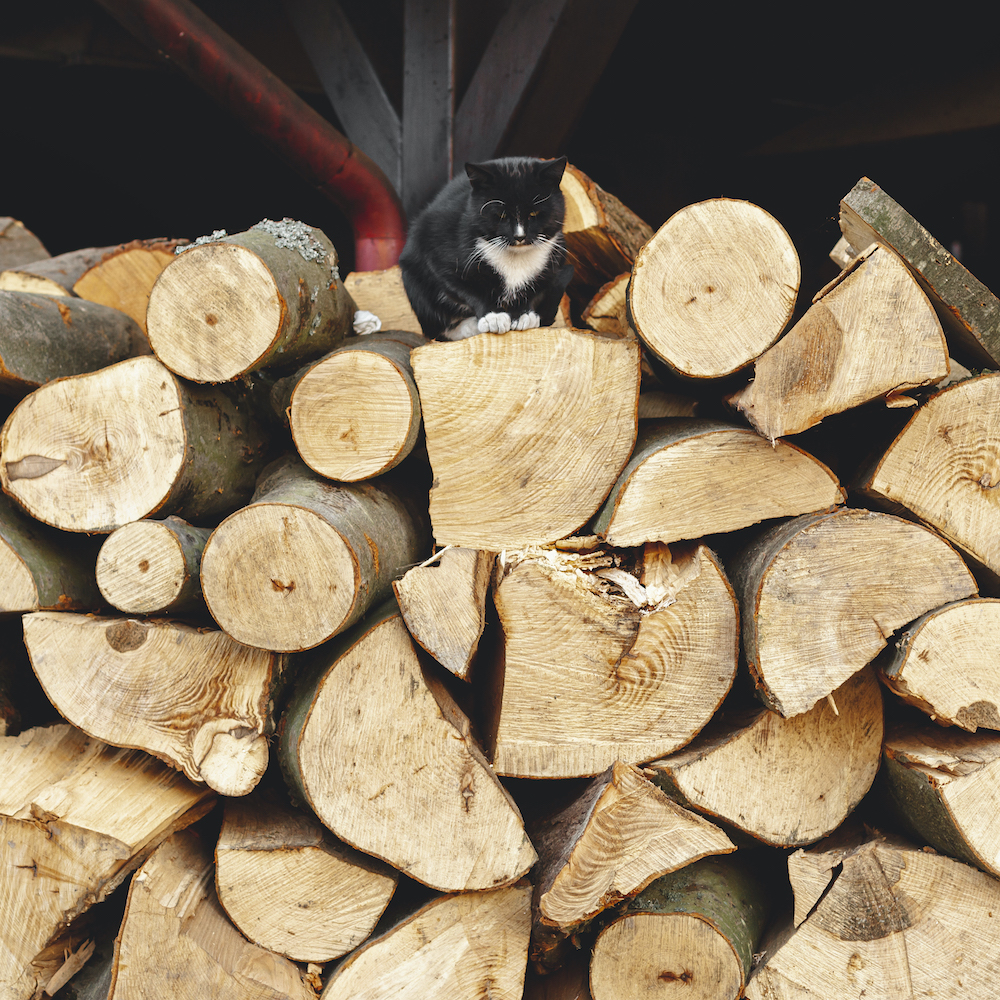
1. Outdoor Firewood Storage Under a Canopy — A Classic and Reliable Solution
One of the most popular and safest options is storing firewood outdoors under a canopy.
Advantages:
- natural ventilation;
- fast drying of firewood;
- no moisture or condensation;
- minimal risk of mold.
Basic rules:
- the canopy must fully protect the firewood from rain and snow;
- side walls should preferably be open or have ventilation gaps;
- firewood must not touch the ground.
Ideally, raise the firewood 10–15 cm above the surface using pallets or beams.
2. Firewood Rack Near the House: Convenient, but with Proper Distance
A very common option is a firewood rack attached to the house wall. It is convenient to use in winter but requires proper placement.
How to do it correctly:
- minimum distance from the wall — 5–10 cm for ventilation;
- do not place the rack near ventilation openings;
- avoid proximity to windows and doors.
Important: firewood should not block air circulation around the house or create damp zones.
3. DIY Firewood Rack: A Practical Solution for Any Yard
The query “DIY firewood rack” remains consistently popular, as this option allows you to:
- save money;
- adapt the structure to your specific needs;
- choose optimal dimensions.
Main requirements for a firewood rack:
- solid base (concrete, paving stones, beams);
- sloped roof;
- side ventilation gaps;
- convenient access for stacking firewood.
Materials:
- wood (requires antiseptic treatment);
- metal;
- combined structures.
The key point is not to make the rack airtight. Firewood needs air.

4. Indoor Firewood Storage: When It Is Appropriate
Storing firewood indoors or in a basement is possible, but only under certain conditions.
When it is acceptable:
- a small supply of firewood for 1–2 days;
- well-ventilated space;
- stable temperature without fluctuations.
What to avoid:
- storing large volumes in living areas;
- placing firewood too close to an open fireplace;
- contact with a damp floor.
The best solution is a compact decorative firewood holder near the fireplace for daily use.
5. Under a Canopy with Side Protection: Balance Between Ventilation and Dryness
For regions with strong winds and slanted rain, the optimal option is a firewood rack with partial side protection.
How it works:
- the roof protects from precipitation;
- side panels made of wood or metal leave ventilation gaps;
- the back wall protects against wind gusts.
This solution is ideal for long-term firewood storage for a fireplace.
6. Sorting Firewood by Wood Species: Practical and Efficient
Different wood species have different heating values and purposes. Therefore, storing firewood mixed together is not the best idea.
Recommended firewood species for fireplaces:
- oak — long, even burning and high heat output;
- hornbeam — one of the best options in terms of efficiency;
- ash — stable flame with minimal sparks;
- beech — good heat value and pleasant aroma.
For quick ignition:
- birch;
- alder;
- fruitwood species.
Sorting simplifies fireplace operation and allows more efficient use of fuel.
7. Proper Firewood Stacking: A Small Detail That Matters
Even the perfect storage location will not help if the firewood is stacked incorrectly.
Basic stacking rules:
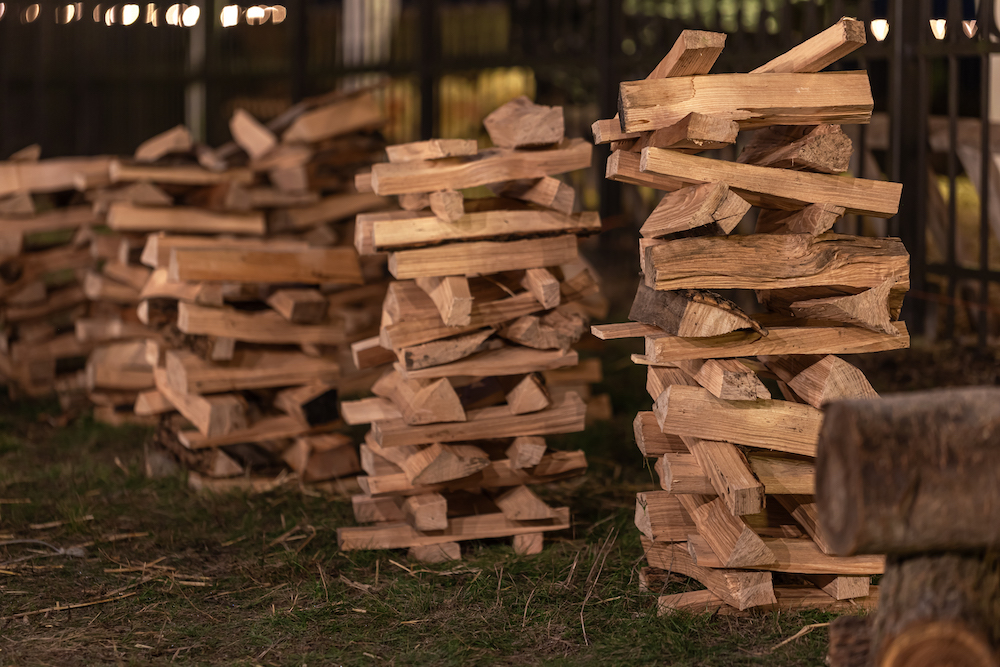
- stack firewood with gaps for air circulation;
- alternate the direction of layers;
- do not press firewood tightly against walls;
- do not exceed height without proper support.
Most common mistakes:
- dense, airtight stacks;
- storage without a base;
- covering with plastic film without ventilation.
Firewood Moisture Content: A Key Performance Indicator
For proper fireplace operation, firewood moisture content should not exceed 18–20%.
Wet firewood:
- burns worse;
- produces less heat;
- generates more soot.
The optimal natural drying period for firewood is from 12 to 24 months, depending on the species.
Quick checklist: how to store firewood properly
- Protection from precipitation
- Good ventilation
- Raised above ground
- Sorted by wood species
- Small indoor supply
- Proper stacking
Properly organized firewood storage is a simple way to:
- increase the efficiency of a fireplace or stove;
- reduce heating costs;
- ensure home safety;
- extend the lifespan of fireplace equipment.
By following these recommendations, you will know exactly how to store firewood properly, safely, and with maximum benefit for your fireplace.