

When choosing a fireplace, an important criterion is the steel thickness of the fireplace insert. This factor is often overlooked by buyers, but in fact, it directly affects the durability, efficiency, and safety of the fireplace.
What should the steel thickness in fireplace inserts be?
The thickness of the steel in the fireplace insert determines not only the resistance of the body to high temperatures but also its ability to accumulate and radiate heat, as well as its resistance to deformation and burnout.
- 3 mm steel thickness in a fireplace insert is the minimum acceptable thickness for a quality insert. These inserts are lighter, heat up faster, but are less durable without additional protection.
- 4 mm steel thickness — an optimal choice for medium loads, providing a balance between weight, strength, and cost.
- 5–6 mm steel thickness — ideal for intensive use. These inserts can withstand prolonged operation at high temperatures, offering better heat resistance and heat accumulation.
How to reduce the risk of steel burnout?
Even the highest-quality steel is subject to the effects of high temperatures and the aggressive combustion environment over time. To extend the lifespan of the insert, it is important to:
- Use lining — an internal protective layer made of chamotte or vermiculite;
- Avoid overheating the firebox — do not exceed the temperature specified by the manufacturer;
- Use only dry wood — moisture content up to 20%;
- Perform regular maintenance, cleaning of the combustion chamber and chimney.
Additional protection: lining with chamotte or vermiculite
Lining is a fire-resistant internal layer that absorbs the main thermal load. The most common materials are chamotte and vermiculite:
- Chamotte — denser and more durable, with high heat capacity. Ideal for long-term heat retention.
- Vermiculite — lighter, heats up faster, but is less resistant to impacts and high temperatures compared to chamotte.
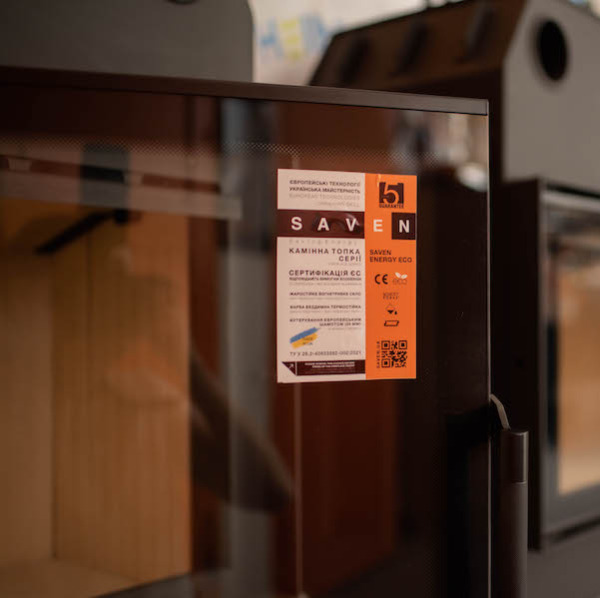
SAVEN fireplace inserts — quality from the inside
In the production of SAVEN inserts, hot-rolled low-alloy boiler carbon steel of Ukrainian origin is used.
5 mm thick low-alloy boiler steel — the foundation of durability
Low-alloy steel has a reduced amount of harmful impurities and an optimized composition due to the addition of alloying elements (up to 10–15%), which improve its:
- heat resistance,
- strength and toughness,
- weldability,
- resistance to deformation.
Depending on the thermal zones of the structure, 3–5 mm thick steel sheets are used in SAVEN inserts. This approach allows for the creation of reliable and durable fireplaces capable of withstanding intensive use.
Chamotte lining with exclusive SAVEN design
All SAVEN fireplace inserts are equipped with internal lining made of thick Czech chamotte panels, which feature a signature design.
These panels:
- withstand temperatures up to +1200°C,
- have increased resistance to temperature fluctuations,
- accumulate heat and retain it for a long time — increasing the duration of heat release,
- are available in cream or black color options for each SAVEN insert model.
Chamotte not only protects the steel walls from overheating and burnout but also significantly increases the efficiency of heating the room. Its dense structure allows for heat accumulation and gradual release into the room even after the fire has gone out.
Therefore, the steel thickness of a fireplace is a critically important parameter when choosing a fireplace insert. Combined with high-quality chamotte lining, it determines not only the product's durability but also its ability to efficiently heat your home.
SAVEN uses optimal technical solutions to create reliable Ukrainian-made fireplaces — with properly selected steel thickness and protective lining made of premium chamotte.