

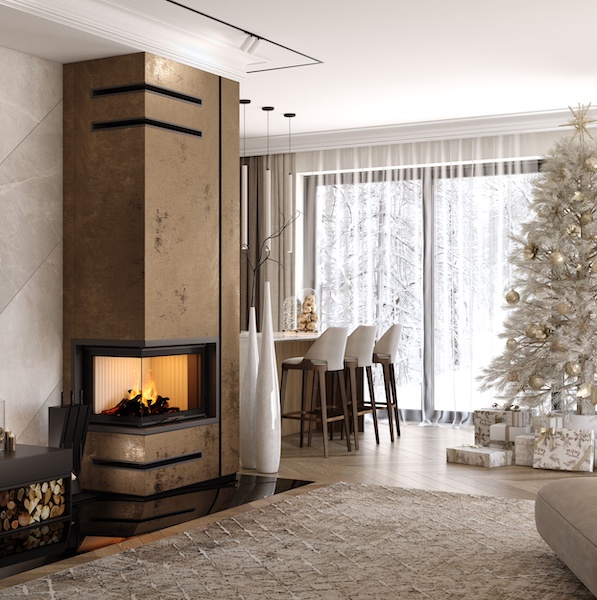
Why would anyone light a fireplace in early autumn, in spring, or — even more so — in summer? Because the weather can be treacherous and does not follow the calendar. Even in summer there are cold nights and grey, rainy days. And if you have a wood-burning fireplace or stove at home, why limit yourself in warmth and comfort?
Heating with a wood-burning fireplace during the transitional season and in bad weather can be a very effective and cosy way to warm a room. However, this period is marked by changing temperatures and the arrival of cold or rainy days, so it is worth following a few rules to use the fireplace efficiently and keep the house comfortable.
How do you heat a house with a fireplace in bad weather or between seasons?
In short: burn smaller batches of dry wood with a more open air supply, keep the ash cleared, and keep a reserve of firewood for a sudden cold snap. Below is the same advice in more detail, point by point.
1. Choosing the right fuel.
During the transitional period air temperatures vary, so choose your fuel according to how much heat you need. Hardwood gives good, strong embers, while fruit wood burns more calmly and produces a gentler heat.
2. Constant attention to the fireplace.
In the transitional period, when the temperature fluctuates, it is important to control how intensely the fire burns. Adjust the amount of wood to keep the temperature comfortable. Also clean the ash out of the firebox or stove from time to time to maintain a normal draught and efficient combustion.
3. A stock of firewood.
Always keep a stock of firewood for the transitional period and for bad weather. That way you can quickly increase the heating intensity if the temperature drops or the weather turns cold.
4. Protection from wind and cold air.
In the transitional period and in bad weather it is important to prevent cold air from entering the room.
5. Stabilise the draught in the chimney.
In transitional periods, at an outside temperature of 15°C or above, and in unfavourable weather (strong wind, rain, fog and so on), the draught in the chimney can be disturbed. As a result, when the door is opened the combustion products come back into the room, and there is more smoke in the combustion chamber even during normal burning. In such a situation you need to put less fuel into the firebox and increase the air supply. This stabilises the draught and regulates the combustion process (though you may have to add wood more often). To reduce air resistance, remove the ash more frequently. Once the draught has stabilised, you can gradually reduce the air supply while watching how the fire behaves.
Why does the draught weaken in warm weather?
The draught in a chimney is created by the difference in temperature between the flue gases and the outside air: the hot, light gases rise and pull fresh air into the firebox. When it is warm outside, that difference shrinks and the "pull" of the chimney weakens on its own — this is physics, not a fault of the appliance. That is exactly why in mild weather it is worth burning smaller batches of wood with a more open air supply: the flue gases stay hotter and the draught recovers.
The height and diameter of the flue matter here too: a chimney that is too short or too wide behaves noticeably worse in warm weather. Certified modular systems are gathered in the chimneys section, and the diameter is always chosen according to the data sheet of the specific model. If the fire keeps going out or smoke enters the room, look at the article top 3 problems in the operation of a fireplace and their solutions.
By following these rules you will be able to enjoy the comfort and efficient heating of a wood-burning fireplace during the transitional period and despite bad weather. And if you are only planning a fireplace, start with straight steel inserts, corner inserts or steel fireplace stoves.